Listen longer than you draw.
Before we begin, we spend a year on the site in every season. We do not decide anything before we have slept under its stars, walked it in the rain, and eaten with the people who have always lived there.
Chapter IV
A philosophy
“I don't build for a place. I try to build as if the place had quietly been building itself, and I only arrived to finish the sentence.”
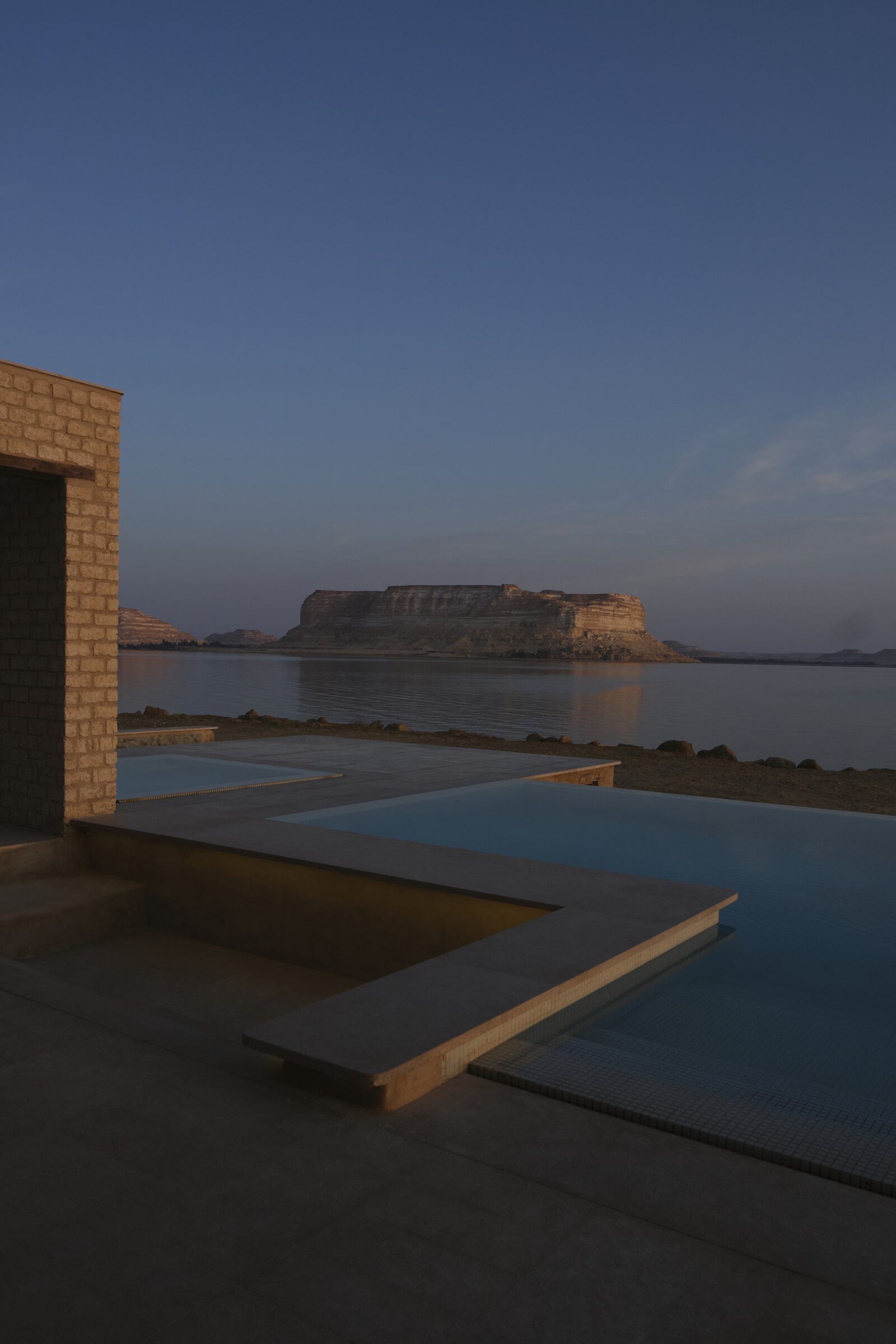 The front door — acacia, fitted block by block, no two alike.
The Story
Trained as an architect in Alexandria, then in Milan, the designer spent a decade working on other people's houses in other people's cities before Siwa pulled him sideways. The first time was a short trip. The second time, he didn't leave for a year.
Bayt Gagy began as a sketch in a notebook during that year — a single line drawn along the shore of the salt lake, where the palm grove ends and the desert begins. Everything else grew from that line.
Today the studio is small — two draughtsmen, a model-maker, a cook — and produces a single building every two years.
Method
Four tenets
They sound like stone, but they bend when the site asks them to.
Before we begin, we spend a year on the site in every season. We do not decide anything before we have slept under its stars, walked it in the rain, and eaten with the people who have always lived there.
The most sustainable material is the one that is already next to the site. We use it even when it is harder — because the building then belongs to the place in a way no imported marble ever will.
Siwan masons have been building with kershef for a thousand years. Our job as designers is to get out of their way — to protect the craft, not supervise it.
A good building does not announce itself. When a visitor walks in and says "this has been here forever," we know we have finished. That is the highest compliment in our studio.
Method
A long visit — every season, every weather. Nothing is drawn until the site is known in the body, not just on the map.
We sit with the elders, the farmers, the masons. We ask what has worked here for a hundred years — and why. Their answers become the brief.
One hand-drawn plan. One section. One elevation. The house exists on a single A2 sheet before any detail is touched.
No outside contractors. Every wall is laid by a mason who can name his grandfather's buildings. No machines on site.
Lime washes applied in five coats over a month. Woods oiled by hand. Nothing rushed. Nothing sealed with silicone.
We hand over the keys, then stay another month — to live in the house ourselves before the client does. Small things always need adjusting.
Portfolio · 2015 — 2026
A house every two years, on average. A few interiors. One restoration. Each one finished slowly, and only when it was finished.
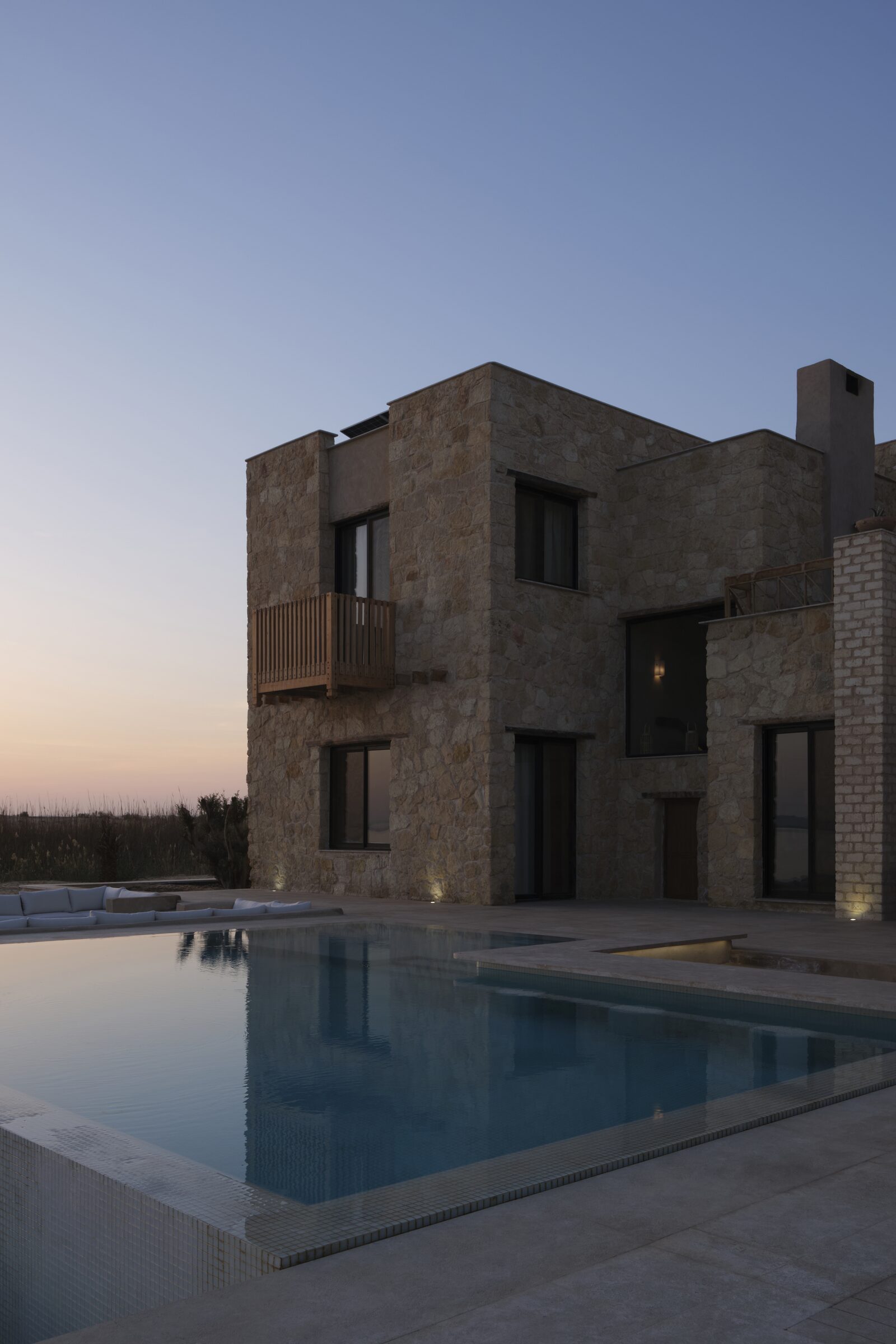
A salt-stone house on the edge of Birket Siwa. Built with local masons using kershef, palm and lime. The studio's largest and slowest work to date — and the one the studio was, in a way, always going to build.
Open the house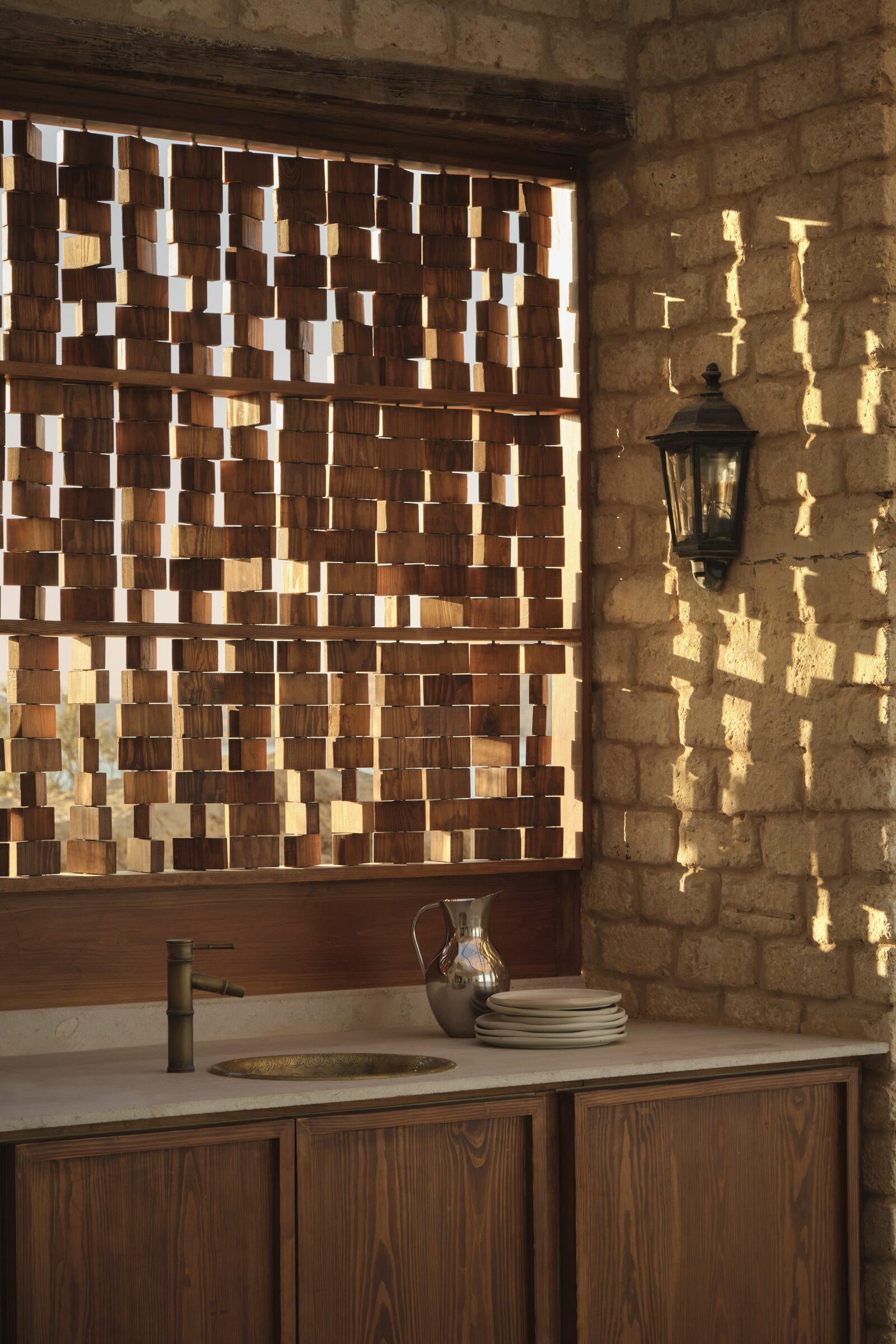
A standalone commission — a wall of hand-fitted acacia blocks for a private kitchen in the oasis. A study in light filtration using nothing but offcuts from a local carpenter.
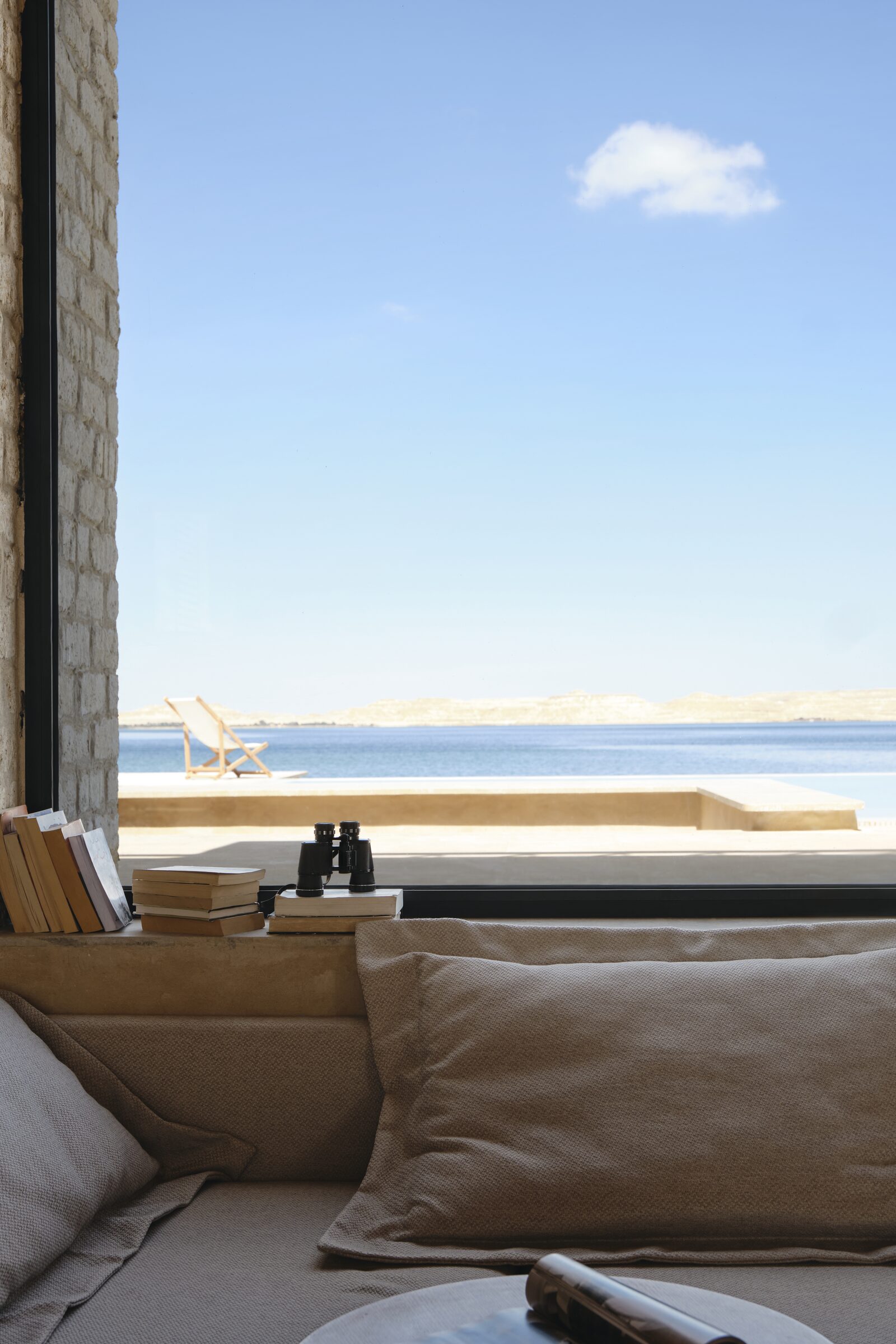
A pro-bono restoration of a small corner of the old Shali fortress, in collaboration with the Siwan Heritage Trust. Mud-brick, lime, and a single new palm-beam ceiling.
An urban courtyard house for a family of five. A lattice-walled living room that filters the Mediterranean light into coins across the floor. The studio's first work built entirely with hand-carved wood.
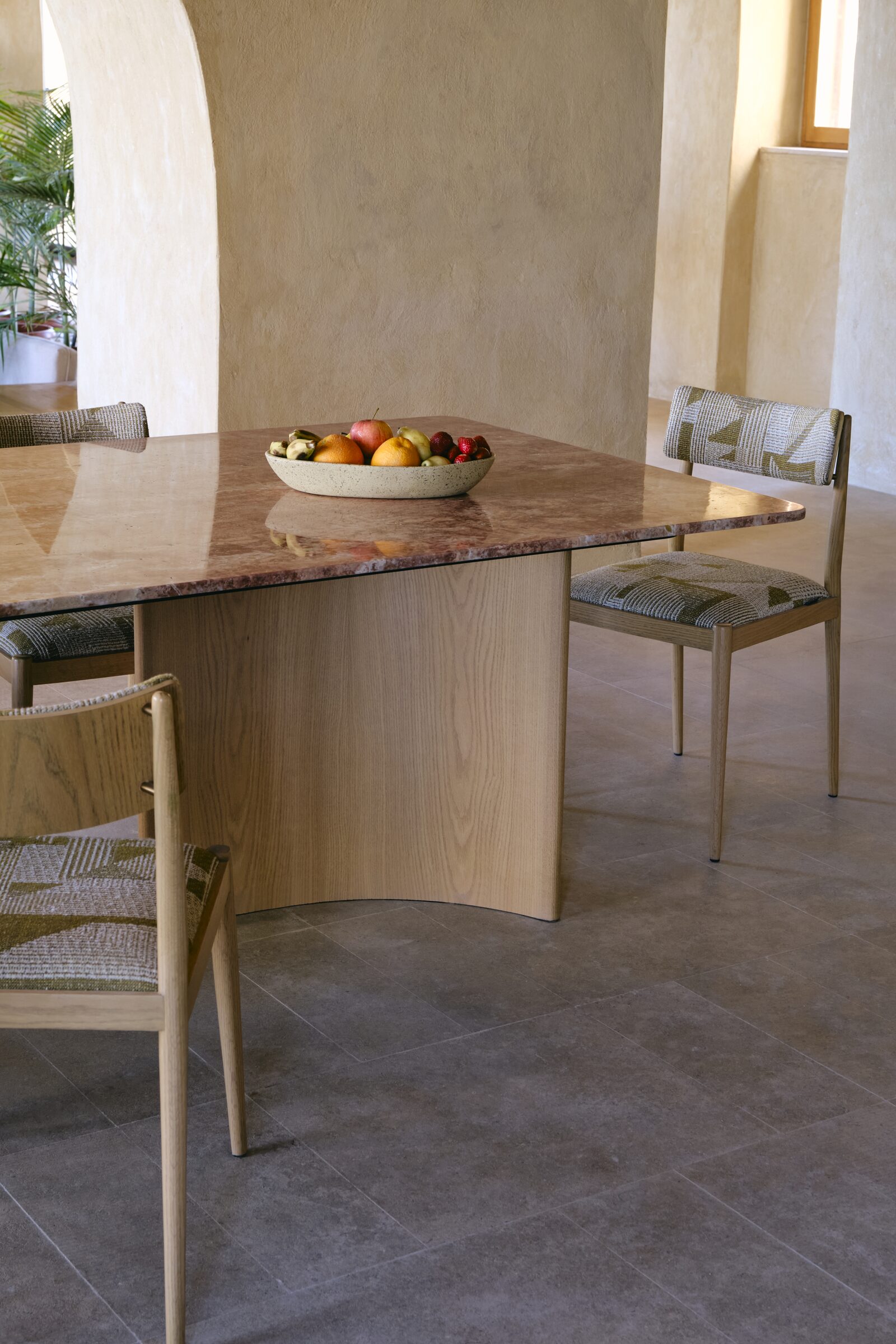
A single-room pavilion on the salt lake — the first Siwan project, and the one that started the conversation. Built in six weeks. Still standing.
Kind words
End of Chapter IV
The studio takes a very small number of commissions each year.
Write and tell us about the place.